A cable lug is a small part, but choosing the wrong one can create an expensive problem. The cable may fit inside the barrel while the conductor material, palm dimensions, bolt system, or voltage application remains unsuitable.
Mechanical cable lugs remove one common complication from cable termination: they do not normally require a hydraulic crimping tool. Bolts hold the conductor in place instead of a compressed barrel. This is useful during site work, maintenance, switchgear assembly, and cable accessory installation.
That does not mean any mechanical lug will work with any cable. Conductor size is only the starting point.

What is a mechanical cable lug
A mechanical cable lug connects a power cable to a busbar, transformer, switchgear unit, circuit breaker, or another electrical terminal.
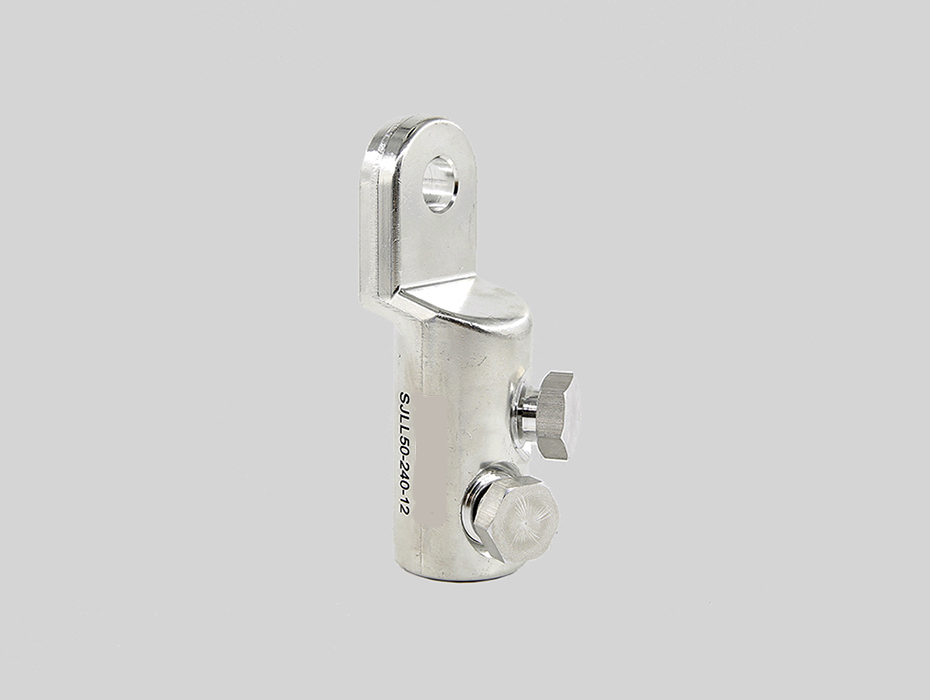
After the stripped conductor enters the barrel, one or more bolts press it against the inside of the lug. Some products use set screws that must be tightened to a stated torque. Others use shear bolts whose heads break away when the designed tightening point is reached.
The second design is common in medium voltage cable accessories because it gives the installer a visible indication that tightening is complete. Correct cable preparation and the specified bolt sequence still matter.
Mechanical lugs are made from copper, aluminum alloy, or a combination of metals. Tin plated aluminum alloy is widely used in power cable applications and offers additional surface protection.
The main types of mechanical cable lugs
The name covers several designs. Before comparing prices, identify the required bolt system, palm arrangement, conductor range, and material.
Set screw mechanical lugs
A set screw lug uses one or more screws to hold the conductor in the barrel. The screws are tightened with a wrench or torque wrench.
These lugs are found in distribution panels, transformers, industrial equipment, and low voltage systems. Some accept both copper and aluminum conductors. Others are approved for only one material, so the product data must be checked.
Shear bolt cable lugs
A shear bolt lug has engineered bolt heads that break at a predetermined point. Installation is therefore less dependent on an installer judging pressure by feel.
One model may cover several conductor sizes, sometimes with removable inserts for smaller cables. This can reduce the number of products that a distributor or contractor needs to keep in stock.
Shear bolt lugs are often installed inside medium voltage terminations and joints. In that setting, outside diameter matters as much as conductor range. An oversized lug may not fit correctly inside the insulation and stress control components.
Single hole and two hole lugs
A single hole palm is compact and works well where the equipment terminal has limited space. A two hole palm resists rotation and is used when the equipment has a matching mounting pattern.
Check the palm width, thickness, hole diameter, and hole center spacing before ordering. A lug can fit the conductor perfectly and still be impossible to mount.
Bimetallic lugs
A bimetallic lug is used when the conductor and equipment terminal are made from different metals, such as an aluminum cable connected to a copper terminal.
Direct contact between unsuitable metals can lead to corrosion and poor electrical contact. The connector must be designed for the specific material combination. Its color or surface finish is not enough to prove compatibility.
Mechanical lugs and compression lugs compared
Both connection methods can be reliable. The practical difference is how the joint is made and which tools and controls are needed during installation.
Comparison of common cable lug connection methods
| COMPARISON FACTOR | MECHANICAL CABLE LUGS | COMPRESSION CABLE LUGS | SHEAR BOLT CABLE LUGS |
|---|---|---|---|
| Connection method | Set screws or bolts | Barrel compressed around the conductor | Bolts tighten until their heads shear |
| Typical tools | Wrench or torque wrench | Hydraulic or battery crimper with matching die | Wrench or specified installation tool |
| Separate crimping die | Not normally required | Required | Not normally required |
| Conductor coverage | Some models cover several sizes | Usually matched to one cable size | Often covers a stated size range |
| Installation control | Correct torque and bolt sequence | Correct die and crimp sequence | Bolt design and tightening sequence |
| Common use | Panels switchgear and distribution equipment | General power wiring and equipment connections | MV cable joints and terminations |
| Main point to verify | Torque and conductor compatibility | Cable size lug size and crimping die | Cable construction size range and accessory fit |
Compression lugs make sense when installers already have the approved tools and repeat the same termination many times. Mechanical lugs are useful when carrying a full set of crimping dies is inconvenient or when one lug needs to cover several conductor sizes.
The cable and equipment requirements should decide the connection method. Neither type is automatically better in every installation.
Typical installation workflow
A mechanical lug normally requires cable preparation, conductor insertion, bolt tightening, and inspection. A compression lug adds the selection and checking of the correct crimping die. The chart places that difference next to the workflow it describes.
For a set screw mechanical lug, the four stages are stripping the conductor, inserting it, tightening the bolts in sequence, and checking the completed connection.
A compression lug usually involves five stages: conductor preparation, die selection, conductor insertion, crimping, and inspection. A shear bolt lug returns to four broad stages, although the installer must also confirm that any required insert is fitted and each bolt head has sheared correctly.
Where mechanical cable lugs are used
Distribution panels
Mechanical lugs connect incoming and outgoing cables to busbars, breakers, and other panel components. In a crowded cabinet, palm dimensions and cable bending space often decide whether the installation will be straightforward.
Switchgear and transformers
These connections require firm contact between the cable and equipment terminal. Buyers need to check the mounting hole, terminal material, conductor size, and available clearance.
Low voltage networks
Set screw lugs are used in commercial buildings, industrial facilities, utility equipment, and solar installations. They are convenient for repair and site work where a crimper is not readily available.
Medium voltage cable accessories
Shear bolt lugs are commonly installed inside MV cable terminations and joints. The lug has to work as part of the complete accessory. Its barrel diameter, bolt position, finished surface, and overall length can affect the insulation components fitted around it.
Solar and energy storage equipment
Inverters, battery cabinets, combiner boxes, and energy storage systems can carry substantial current through compact equipment. Lug material, current requirements, temperature rise, and terminal dimensions must match the equipment design.
How to choose a mechanical cable lug
Start with the conductor
Record the conductor material, cross sectional area, and construction. A 240 square millimeter aluminum sector conductor is not the same selection problem as a 240 square millimeter round copper conductor. The nominal area is identical, but the shape, material, and response to bolt pressure differ.
State whether the conductor is copper or aluminum, solid or stranded, round or sector shaped, and compacted or noncompacted. If the project uses AWG or kcmil, provide that value rather than relying on a quick metric conversion.
Check the approved size range
The cable size must fall inside the manufacturer stated range. If a removable insert is needed for a smaller conductor, confirm that it is supplied and shown in the installation instructions.
Do not judge the fit only by inserting an unprepared cable into a sample. The connection must develop the required contact pressure after installation.
Match the metals
Confirm the conductor material and the material of the equipment terminal. Ask whether the lug is intended for copper conductors, aluminum conductors, or both.
Where aluminum cable meets copper equipment, a connector designed for that transition may be required. Grease or tin plating alone does not turn an incompatible lug into a bimetallic connector.
Check the voltage and cable accessory
For a low voltage panel, buyers usually focus on conductor range, current requirements, and mounting dimensions. An MV or HV accessory has more dimensional constraints. The lug must fit inside the termination or joint and work with the surrounding insulation components.
Send the cable data sheet and accessory details with the inquiry when possible.
Measure the palm
Check the palm width, thickness, mounting hole diameter, number of holes, hole spacing, and available installation space. A drawing is more useful than a description such as “standard palm” or “normal two hole type”.
Consider the working environment
Tell the supplier if the lug will be installed outdoors, underground, near the coast, or inside a chemical plant. Moisture, salt, industrial chemicals, and temperature changes may affect the base material, plating, sealing, and corrosion protection.
Mistakes worth avoiding
The most common mistake is sending the supplier only a cable size. An inquiry that says “aluminum conductor 240 square millimeters compacted sector shape” is far more useful than one that simply says “240 square millimeters”.
Another mistake is assuming that every aluminum lug accepts copper cable. Some do and some do not.
Palm dimensions also cause avoidable delays. A sample may fit the cable but arrive on site with the wrong mounting hole or an oversized palm.
For medium voltage work, do not approve the lug separately from the cable accessory. The parts must fit together after the bolts have been tightened and sheared.
What to send with an inquiry
- Cable conductor material and size
- Conductor shape and construction
- System voltage
- Required lug material
- Single hole or two hole palm
- Hole diameter and hole spacing
- Indoor or outdoor use
- Equipment terminal drawing
- Required test documents
- Order quantity and packaging requirements
For an existing design, send a drawing or physical sample. For a new design, explain where the lug will be installed and which components surround it. That context can reveal problems that a dimension list misses.
Custom mechanical cable lugs
A standard product is usually the fastest option, but it will not fit every terminal or cable accessory.
OEM and ODM mechanical cable lugs can use a different conductor range, palm size, mounting pattern, bolt arrangement, surface treatment, or product marking. Custom packaging is also available for distributors and private label programs.
Our factory develops and manufactures electrical connection components for cable and power distribution applications. We review customer drawings, samples, and technical requirements before recommending a standard model or preparing a custom solution.
For suitable projects, free samples are available for dimensional checks and installation trials. Test the sample with the actual cable and equipment whenever possible.